Employment incentives in the city of Zurich

Project description

In this study, we examine how different household configurations are affected by the current system. Our focus lies on analyzing the perverse incentives and on providing specific reform recommendations for the existing system. We also discuss the key findings in the following podcast:

Enable This Content

Content required confirmation

Accept
Show More

Specifically, we examine the following constellations:

  1. Both spouses could earn a gross income of CHF 100'000 working full-time. They have two children of preschool age (basic scenario). 

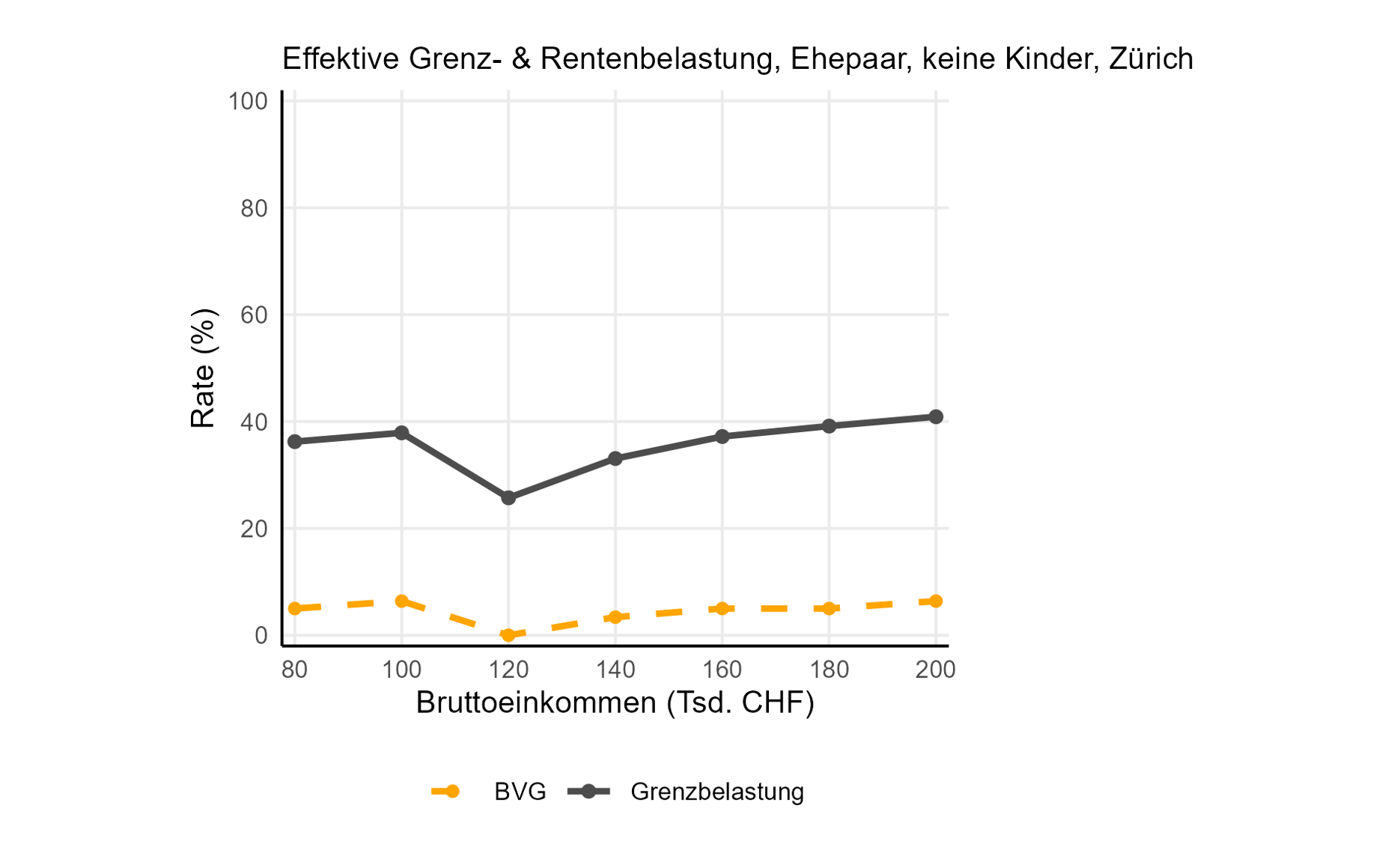
  2. Both spouses could earn a gross income of CHF 100'000 working full-time. They don't have children.

  3. Both spouses could earn a gross income of CHF 100'000 working full-time. They have two children who go to school. 

  4. Both spouses could earn a gross income of CHF 170'000 working full-time. They have two children of preschool age. 

  5. Both spouses could earn a gross income of CHF 60'000 working full-time. They have two children of preschool age.

  6. The couple could earn a gross income of CHF 170'000 (husband) and CHF 100'000 (wife) working full-time. They have two children of kindergarten age. 

The main conclusions are as follows: 
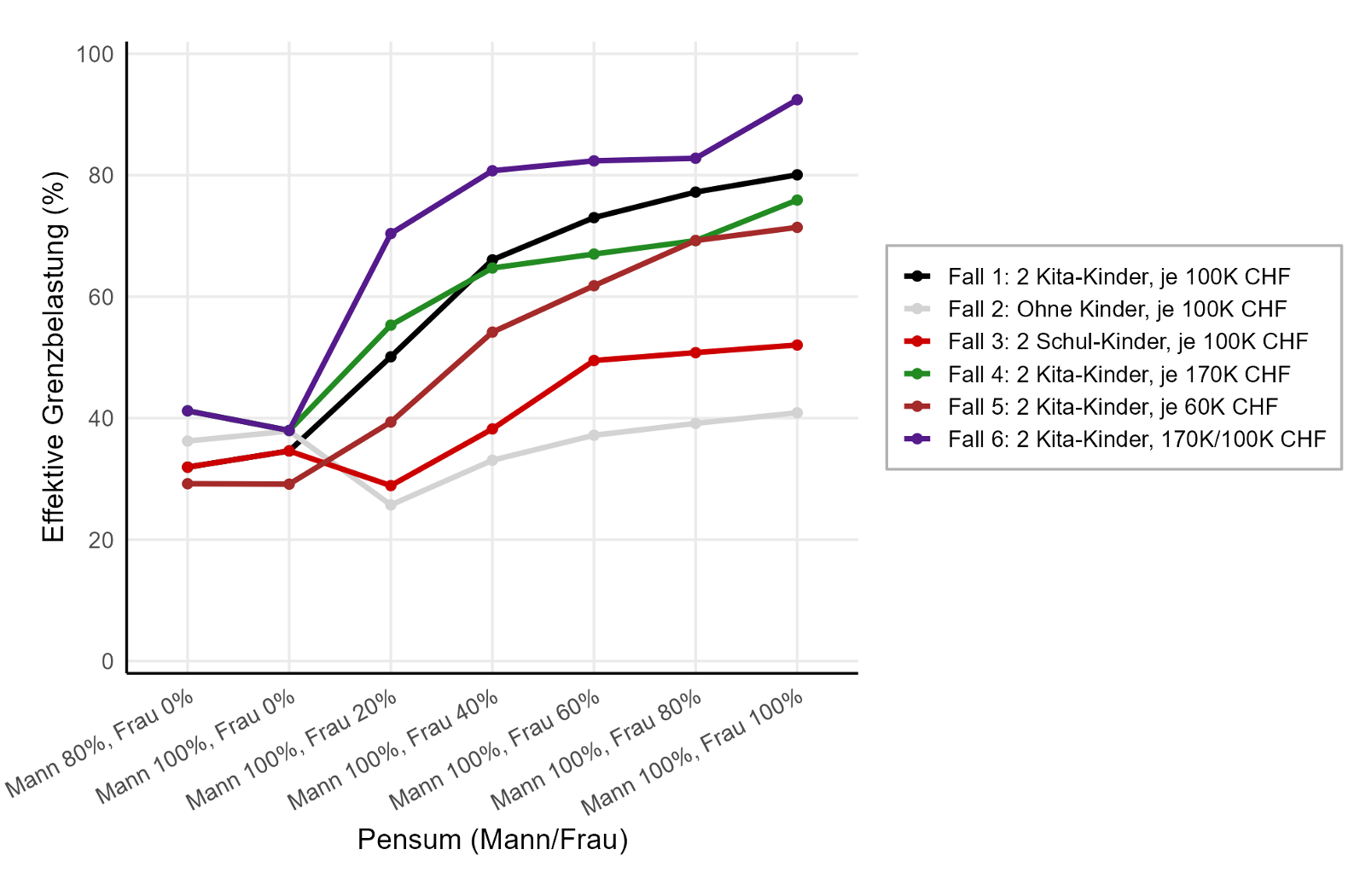
  • The marginal Tax Rate for additional employment varies greatly - almost arbitrarily. 
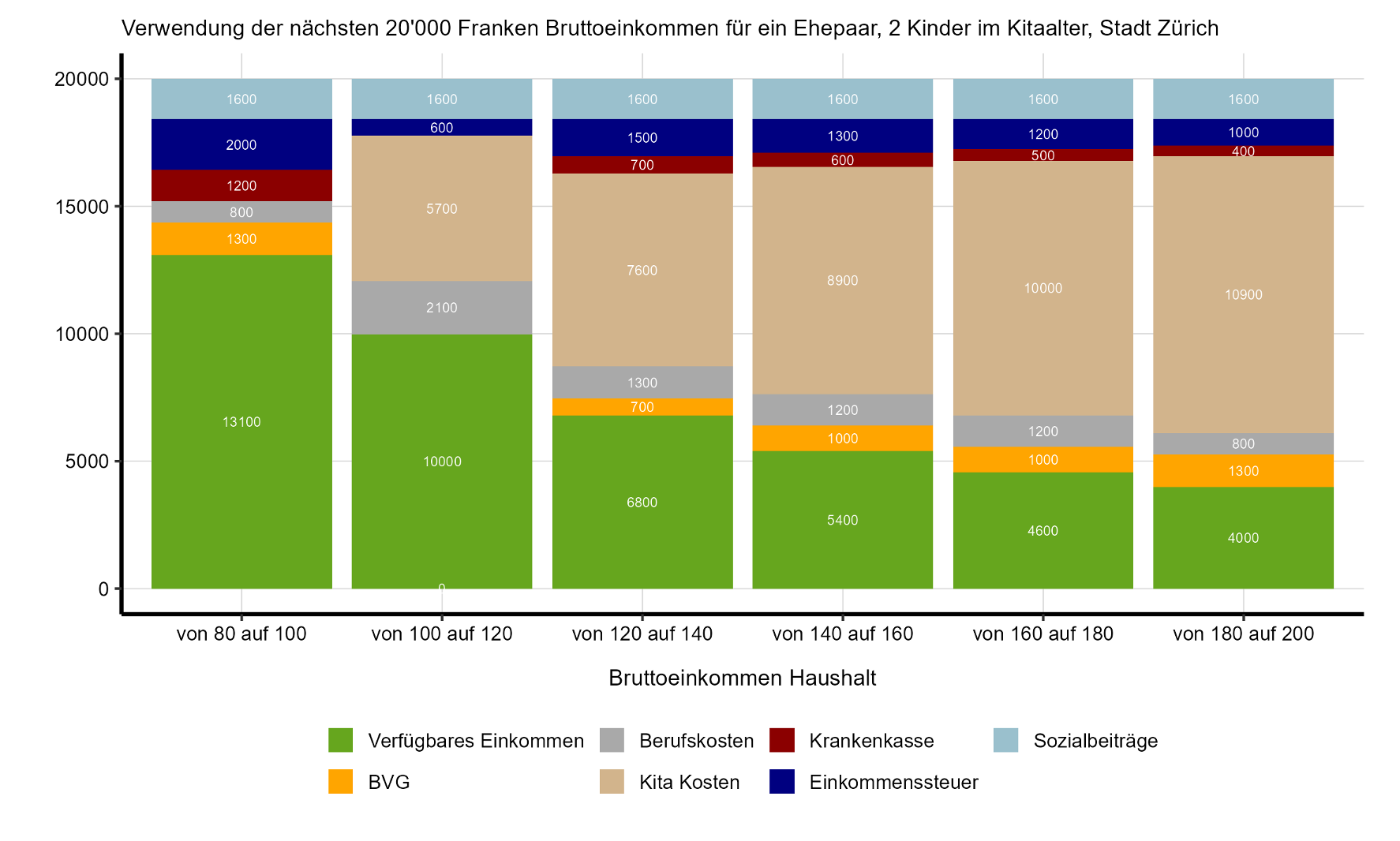
  • The social security and tax system penalizes additional employment for middle and higher incomes (especially secondary earners), primarily through high childcare costs and progressive taxes. Here's an example from Case 1 (both could earn CHF 100'000, working full-time, having two children of kindergarten age):
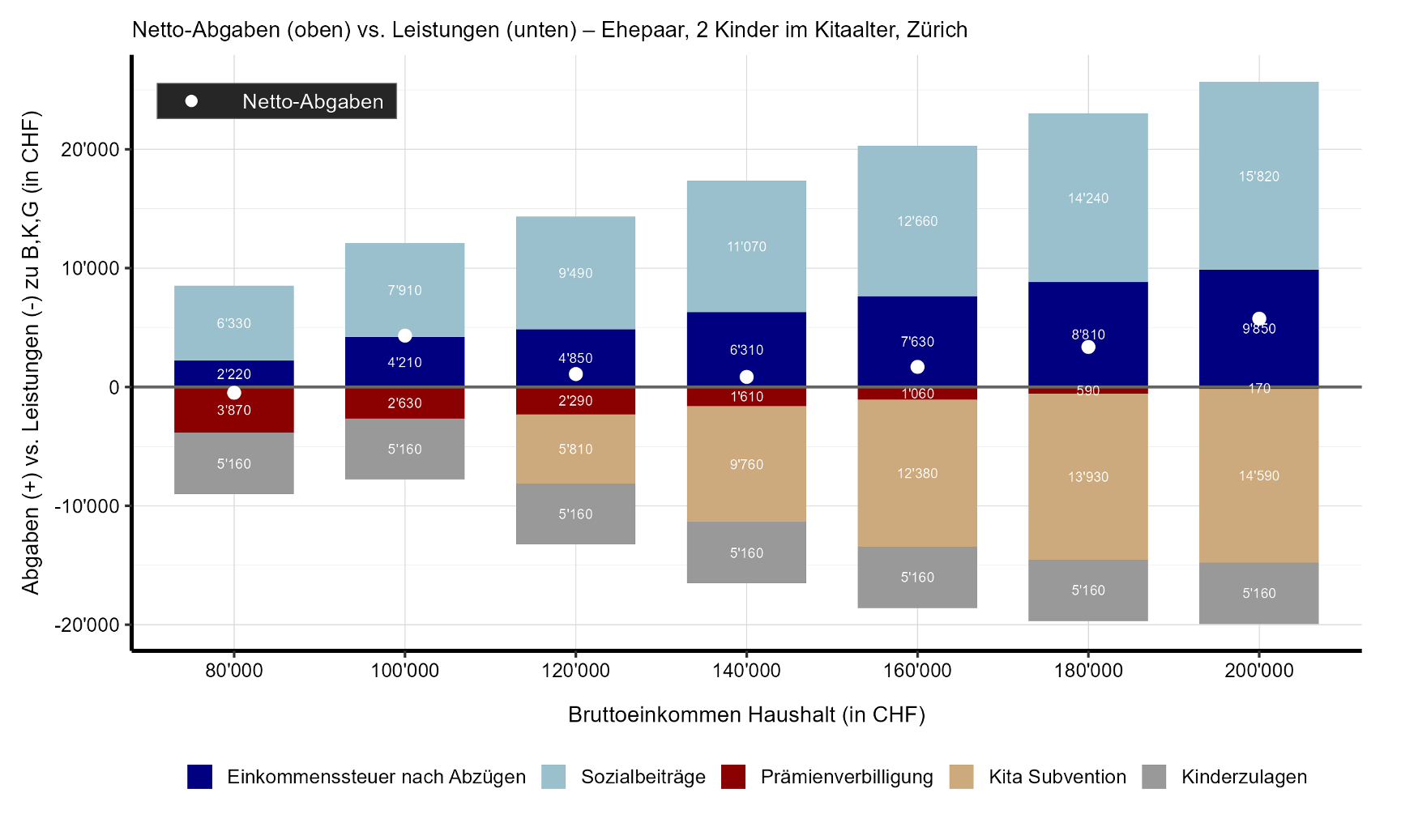
  • A great deal of money is redistributed - often in an untargeted manner: In many situations, there are high taxes and simultaneously high returns (payment/subsidies) - again using the example of Case 1 (both could earn CHF 100'000 with a full-time workload; they have two children of kindergarten age).

We can identify two main thrusts in the reforms: 

  • The marginal tax rate should not exceed 50-60% anywhere. Above that, the additional work is no longer perceived as worthwhile. 
  • Workload increases should not be taxed too progressively - i.e., large differences between increases from 0 to 20% and from 80 to 100% should be avoided. 

How to achieve this: 

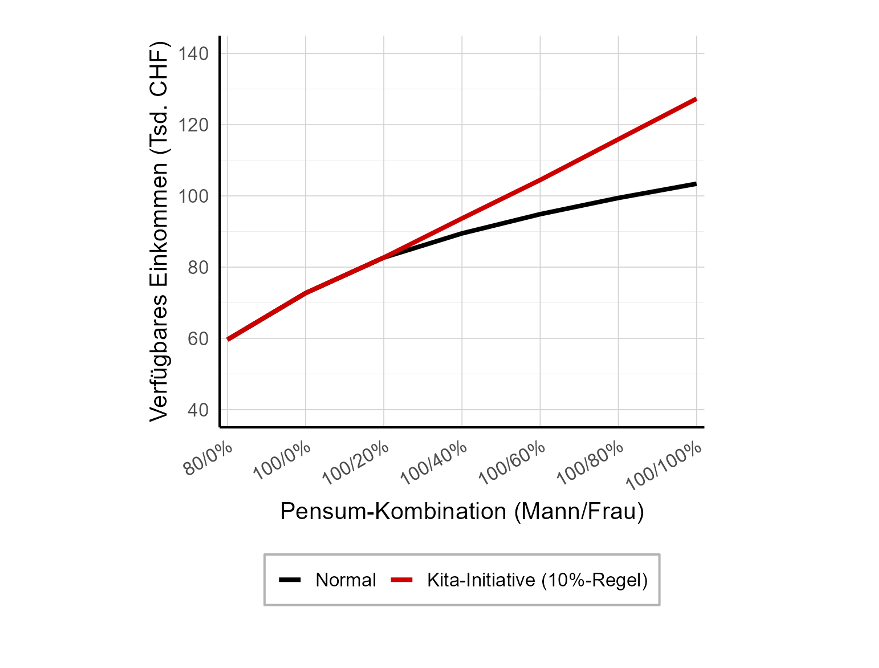
  • No progressive childcare fees. The introduction of uniform childcare fees or a limit based on taxable income (childcare initative) should be examined (here using the example of Case 1 (both could earn CHF 100'000 with a full-time workload; they have two children of childcare age)): 
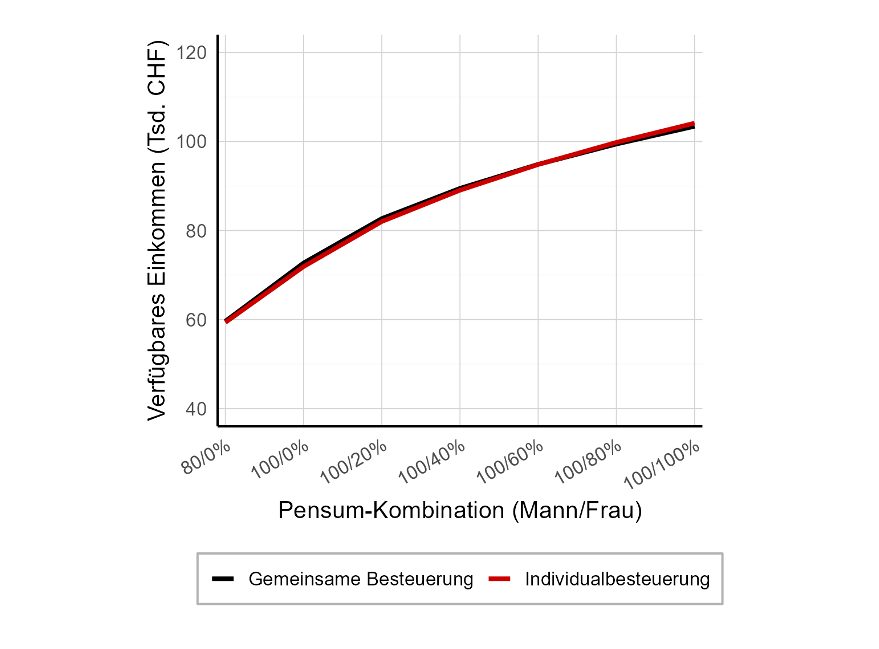
  • The effect of individual taxation is strongly limited - again using the example of Case 1 (both could earn CHF 100'000 with a full-time workload; they have two children of kindergarten age): 
  • The effects of increasing the third-party childcare deduction or abolishing the second-earner deduction need to be evaluated (here using the example of Case 1 - both could earn CHF 100'000 with a full-time workload, they don't have children):

Study materials

Project Team

Peter Hongler

Prof. Dr.

Full Professor of Tax Law / Director

ILE-HSG
Büro 34-103
Varnbüelstrasse 19
9000 St. Gallen

Stefan Legge

Dr.

Head of Tax & Trade Policy / Vice director

ILE-HSG
Varnbüelstrasse 19

9000 St. Gallen
north