Digital Policy Leadership Program

The Digital Policy Leadership Program is open to bachelor’s students from all INSPER (São Paulo) and University of St.Gallen courses. It is designed for those who wish to gain knowledge, experience, networking, and leadership skills in digital policy, benefiting from international exposure and mentorship from experienced professors and researchers.

The University of St.Gallen specializes in business administration, economics, law, international affairs, and computer science and offers an extensive curriculum and research in topics related to digital technologies. INSPER is a leading institution in São Paulo, Brazil, offering innovative and interdisciplinary programs in law, business administration, economics, computer science, and engineering. The Exchange Office at INSPER provides extensive support and integration opportunities for exchange students.

St.Gallen, the capital of the Canton of St.Gallen, features heritage sites of national significance and a UNESCO World Heritage Site. It is close to nature and the mountains, and offers a vibrant student life. São Paulo, Brazil’s largest city, is a vibrant metropolis and a hub for tech companies, digital policy research, and advocacy. The city offers a dynamic mix of cultural experiences, making it an exciting place to live and study.


 

Exchange Details

Partners: University of St.Gallen, Switzerland & INSPER, Brazil.

Duration: 4 or 5 months abroad, in the Fall or Spring semesters.

Key Points

  • Focused Program: Bridging Brazil and Switzerland in issues related to digital policy.
  • Interdisciplinary Approach: Law, economics, business, and computer science/engineering collaboration.

The program, funded by the Lemann Foundation and offered by the University of St.Gallen and INSPER, presents a development opportunity for bachelor students to benefit from the strengths of both institutions in digital policy.

Participants will take classes, conduct research, and have networking opportunities to develop their knowledge and skills. The program integrates interdisciplinary views from Swiss and Brazilian contexts and offers opportunities for developing leadership and career paths in digital policy.

Throughout the exchange program, students will engage in activities to enhance their understanding and skills in digital policy, including:
 Research Projects: Contribute 4-8 hours weekly to research projects at the host institution.
• Mentorship Program: Receive guidance from mentors throughout the program.
• Digital Policy Day: Organize an event fostering community engagement on key topics.
• Networking and Learning Visits: Excursions to meet institutions and stakeholders in Geneva and Brazilian policy and research bodies in São Paulo.

The Lemann Foundation funds costs related to flights, visas, accommodation, and board for the duration of the fellowship abroad.

Applicants must be bachelor’s students at the University of St.Gallen / Insper, should have a keen interest in digital policy, and demonstrate that the program fits their career aspirations. Participants commit to engaging in the programs’ activities.

At the University of St.Gallen: many courses are offered in English. German knowledge benefits student life and a basic course is offered by the University of St.Gallen Mobility Services before each semester starts.

At INSPER: while classes at INSPER can be taken in English, basic knowledge of Portuguese is beneficial for settling in and integrating. The University of St. Gallen offers Portuguese courses that successful applicants are encouraged to consider.

For students at the University of St.Gallen: Applications for Autumn 2027 and Spring 2028 will be opened on the following months.

For Insper Students:  Applications for Spring 2027 are opened since February 2026. The deadline to apply is 20 April 2026. Please visit the application portal to submit all required documents.
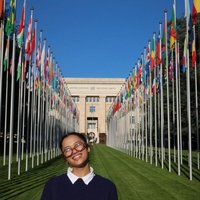
Mariana Valente

Tenure track assistant professor of International Law and Economics at the University of St.Gallen, Switzerland. I am also associate director of InternetLab, a São Paulo-based think tank working on building the evidence for human rights-responsive internet policy. I am dedicated to research in AI and platform governance from a sociotechnical perspective, and IP and cultural and knowledge practices. I was part of the Brazilian Senate Legal Experts Commission, which drafted an AI regulation law.

Before moving to Switzerland, besides InternetLab, I taught and coordinated the Certification for Law and Technology at the Executive Education at Insper. Previously I worked at the Center for Technology and Society of Fundação Getúlio Vargas in Rio de Janeiro, and before that I was the legal coordinator of the Museum of Modern Art of São Paulo. As a lawyer, I worked primarily with heritage institutions and cultural projects. One of the works I am most proud of is developing a copyright policy for the Pinacoteca do Estado de São Paulo, helping the institution towards its culture and heritage preservation and dissemination goals.

I have a doctorate from the University of São Paulo and had study or research experiences at the LMU Munich, Yale University, and UC Berkeley Law School. Before studying law, I got a technical education in data processing at COTUCA-Unicamp. I have authored and co-authored a few books and many papers, which can be found on my academic profiles online.


Ivar Hartmann


Ivar Hartmann has taught and published in the field of law and technology for over 15 years. He has published 12 books, 41 journal articles and 12 book chapters. According to the AD Scientific Index 2024, he is in the top 75 most cited Brazilian legal scholars, measured by Google Scholar’s h index in the last 6 years. Hartmann has been cited by outlets such as The New York Times, The Wall Street Journal, Le Monde, Reuters, Folha de São Paulo, O Globo, Valor Econômico, Estadão and Correio Braziliense. Hartmann has appeared before the Brazilian Supreme Federal Court, as a law professor, and before the Brazilian Congress to share his research findings on free speech, online misinformation and regulation of artificial intelligence. He holds an LLB and MSc from the Catholic University of Rio Grande do Sul (PUC-RS), an LLM from Harvard Law School and a PhD from the State University of Rio de Janeiro. Hartmann is an Associate Professor at Insper in São Paulo (since 2021) and was a Professor at FGV Law School in Rio de Janeiro (2013-2020), where he led, among other initiatives, the Center for Technology and Society (CTS-FGV).

Contact Information

University of St.Gallen:

For issues related to Application/Registration for an exchange semester, visa processes:Student Mobility Services
Paula Vignola de Marco
Dufourstrasse 50
CH-9000 St. Gallen
Phone: +41 71 224 34 08
paula.vignolademarcounisg.ch

Academic Inquires:
Prof. Dr. Mariana Valente
Varnbüelstrasse 19
CH-9000 St. Gallen
Phone number: +41 71 224 26 13
mariana.valente@unisg.ch

Fellowship details:
Leilani Dian Mendes
Varnbüelstrasse 19
CH-9000 St. Gallen
leilani.dianmendes@student.unisg.ch

INSPER:

For academic questions and questions regarding the fellowship:
Prof. Dr. Ivar A. Hartmann
Office 710
Rua Quatá, 300 – Vila Olímpia
São Paulo, SP – Brasil
CEP: 04546-042
ivarAGMLH@insper.edu.br

For issues related to student life, university administration, credits, etc.:
Student Mobility Services
Andreia Lopes de Castro Ribeiro
Rua Quatá, 300 – Vila Olímpia
São Paulo, SP – Brasil
CEP: 04546-042
andreialcr@insper.edu.br
Mentors

Spring Mentors 2026

[Translate to English:] Dr. Clemens Stach | Associate Professor, Director at the Institute of Behavioral Science and Technology at the University of St. Gallen

Dr. Clemens Stachl is an Associate Professor, Director at the Institute of Behavioral Science and Technology at the University of St. Gallen, Switzerland, earned his PhD in Psychology and Statistics from Ludwig-Maximilians University Munich (LMU), Germany. Before assuming his faculty position in Switzerland, he held postdoctoral positions at LMU and at Stanford University, USA. His research analyses human behaviour using digital tools and environments, exploring how digital footprints reveal psychological traits, states, and business outcomes. By integrating traditional methods with large-scale data, his work offers insights into how technology can inform human psychology and decision making at individual and societal levels. 


[Translate to English:] Dr. Luise Koch | researcher at the TUM School of Social Sciences and Technology at the Technical University of Munich

Dr. Luise Koch is a researcher at the TUM School of Social Sciences and Technology at the Technical University of Munich. Her work sits at the intersection of digital policy, gender studies, and computational social science, with a focus on technology-facilitated gender-based violence and its implications for democratic participation and online governance. She combines mixed-methods research, including large-scale social media analysis and primary data collection, to study how digital environments shape inclusion and exclusion in political discourse. Her research has been published in journals such as Information, Communication & Society and Trauma, Violence, & Abuse, and spans collaborations across Europe, Latin America, and South Asia. 

[Translate to English:] Dr. Thorsten Busch | Senior Lecturer at the ZHAW Center for Sustainability Leadership and a Lecturer at the University of St. Gallen

Dr. Thorsten Busch is a Senior Lecturer at the ZHAW Center for Sustainability Leadership and a Lecturer at the University of St. Gallen. In recent years, Thorsten has been teaching game studies, business ethics, corporate responsibility and sustainability, critical thinking, tech ethics, responsible innovation, and digital marketing ethics at the Zurich University of Applied Sciences (ZHAW), the University of St. Gallen (CH), Trinity Business School (IE), and HEC Montréal (CA). Before that, Thorsten was a Postdoctoral Fellow in game studies at Concordia University in Montréal (CA), a Visiting Assistant Professor in corporate social responsibility at the University of Konstanz (DE), and a Senior Research Fellow in data ethics at the University of St. Gallen. He holds a Ph.D. in organizational studies and cultural theory from the University of St. Gallen and an M.A. in political science, economics and management from the University of Oldenburg (DE). 

Spring Mentors 2025

[Translate to English:] Dr. Angela Müller | Executive Director AlgorithmWatch CH, Executive Board Member AlgorithmWatch

Angela is Executive Director of AlgorithmWatch CH in Zurich and Executive Board Member of AlgorithmWatch in Berlin. Before, she led the Policy Team at AlgorithmWatch for four years. She is responsible for the overall strategy of the organization and especially for its work in the fields of policy and investigations. Angela has testified as an expert before the Council of Europe, the German Bundestag and the Swiss Parliament, and was appointed as one of “100 Women in AI Ethics” worldwide in 2024. She is a member of expert working groups of the Swiss Federal Administration and – next to her role at AlgorithmWatch – of the Federal Media Commission. Angela studied political philosophy and ethics and holds a PhD in Law from the University of Zurich, where her research focused on the cross-border applicability of human rights law in the context of globalization and new technologies. She was a visiting researcher at Columbia University, New York, and Hebrew University, Jerusalem.


Prior to her current role, she held positions at different universities, for an innovation platform, a civil society think tank on foreign policy, and the Swiss Foreign Ministry.

[Translate to English:] Bruno Rodrigues | Assistant Professor of Embedded Sensing Systems at the Institute of Computer Science in Vorarlberg (ICV), University of St. Gallen (HSG)

Bruno Rodrigues is an Assistant Professor of Embedded Sensing Systems at the Institute of Computer Science in Vorarlberg (ICV), University of St. Gallen (HSG). He earned his PhD in Computer Science from the University of Zürich in 2020, where he also worked as a postdoctoral researcher until 2023, focusing on passive wireless sensing technologies. His research bridges the theoretical and practical aspects of sensors, with a focus on communication protocols and their tradeoffs in terms of performance, efficiency, and security in various real-world applications.

Fall mentors 2024

[Translate to English:] Dr. Janna Hastings

Janna Hastings is Assistant Professor of Medical Knowledge and Decision Support at the Institute for Implementation Science in Health Care, Faculty of Medicine, University of Zurich, and Vice-Director of the School of Medicine at the University of St. Gallen. She holds a PhD in Computational Biology from the University of Cambridge (2019) and Masters in both Computer Science (2011) and Philosophy (2012). Her interdisciplinary research explores how advanced computational approaches can advance medical research and support clinical practice, with a particular focus on how new, powerful and multi-modal approaches to artificial intelligence can be applied to a wide range of clinical use cases and how such approaches can be made more effective, generalisable and interpretable.

[Translate to English:] Dr. Bruno Mascello

Bruno Mascello is Adjunct Professor of Business Law and Legal Management and Academic Director at the Executive School of Management, Technology and Law (ES-HSG) at the University of St. Gallen, where he is also responsible for the continuing education programs Executive Master Management & Law (EM ML-HSG) and Management for the Legal Profession (MLP-HSG). He also teaches at the University of St. Gallen and its Executive School and researches and publishes in the field of legal management. Finally, he also works as an attorney and consultant.

[Translate to English:] Dr. Graziela Tonin

Graziela has been in the technology market for 19 years, taking on diverse roles. After working as a project manager, she transitioned to a consultant role. She focuses on implementing agile methodologies and software engineering practices, as well as organizing teams, processes, and KPIs. Additionally, Graziela dedicates her time to teaching workshops and delivering talks at companies, events, and universities in Brazil and abroad.

She holds a Ph.D. in Computer Science and has received the US IBM World Award and the Women of Value Award. Graziela is the Director of the Computer Engineering Program and a Professor in the Engineering and Computer Science Program at Insper Institution. She began her academic career by teaching specific classes in postgraduate programs within the technology field. Later, she became a professor at the Federal University, where she served for eight years. After reaching the associate level, she transitioned to Insper, where she has been for nearly three years.

Throughout her 11 years of teaching, she has consistently taught courses in agile methodologies and has been continuously testing and evolving various teaching approaches, educating thousands of students.

Graziela has also taken intentional initiatives to increase the representation of women in technology and improve the overall environment to ensure their persistence in their careers. In addition to her professional work, Graziela actively mentors and contributes to various national entrepreneurship and innovation programs, including Inovativa Brasil.

Fellows

Spring Fellows

[Translate to English:] Beatriz Rodrigues de Freitas

I’m originally from Juazeiro do Norte and currently a scholarship student in Computer Engineering at Insper, in São Paulo. During my undergraduate studies, I have worked with education, artificial intelligence, and bioengineering. I’ve always been interested in multiple fields, and I’ve participated in educational projects since high school, as I believe education has a great impact on society. I’m really excited to be part of DPLP and to learn from both peers and mentors. Through the program, I hope to engage in research and broaden my perspective on how to use technology ethically to benefit diverse groups in society. I’m also eager to gain experience in the academic world, which I consider a potential career path. In addition, I want to develop leadership skills so I can inspire others. 

[Translate to English:] Ellen Coutinho Lião da Silva

Ellen is passionate about the intersection of technology and social impact. She is a full scholarship student in Computer Engineering at Insper who completed her earlier education in public Brazilian institutions, experiencing firsthand the challenges of the country’s educational system. She has contributed to the academic community as a teaching assistant for courses such as Web Technologies and Grand Challenges of Engineering. Through the DPLP, Ellen aims to deepen her understanding of the sociology of technology and information while immersing herself in a new innovative culture to further enhance her problem-solving and creativity skills. 

[Translate to English:] Isabela Borges Monti

Isabela is a first-generation and full-scholarship undergraduate student at Insper. With a major in Economics, she has experience as a research assistant at Insper’s Center of Finance and Macroeconomics and has recently finished an internship at the Center of Economics of the Human Development at the UChicago, thanks to the Summer Institute in Social Research Methods. 

Her interests lay on the intersection of data science applied to economics, spending her free time as a Project Manager at InsperData, a data analysis college club. Although her background with social projects, being benefited from NGOs such as ISMART and Colégio Embraer, she has taken her time to explore all possibilities of Economic Research, from political science to stock market, until she commits to a single knowledge area. Her main goal is become not only the first Economist of her family, but also the first PhD. 

[Translate to English:] Maria Sthefanny Cavalcante da Penha

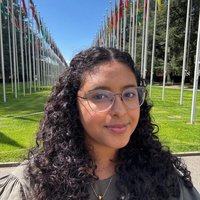
I am a full scholarship Law student at INSPER, passionate about the intersection between law and technology. I am currently researching technological contracts and data protection, driven by an interest in how innovation challenges traditional legal frameworks. I enjoy exploring how insights from different fields such as technology, ethics, and policy can enrich legal thinking and practice. Through the DPLP, I hope to broaden my international perspective, connect with diverse people, and contribute while learning from others. 

Autumn Fellows

[Translate to English:] Théo Gauthier

Théo Gauthier is currently pursuing a Bachelor’s in Business Administration at the University of St. Gallen, with a focus on entrepreneurship, strategic management, and technology integration. In addition to his academic pursuits, he is expanding his knowledge in cybersecurity and international relations. His passion for innovation stems from his love for the ocean as a sailor and his deep interest in technology. After spending a semester in Korea, Théo is excited to embrace the challenges of the Digital Policy Leadership Program. He is looking forward to learning about this environment, and he is certain that this experience will broaden his perspective and open new horizons.

[Translate to English:] Paul Eckstein

I am a Business Administration student at the University of St. Gallen, with a passion for finance and an interest in understanding complex systems. My approach to work builds upon detailed analysis and a focus on delivering results under pressure. I find deep engagement when diving into projects and addressing complex problems. Working in teams is also a source of energy and performance for me, as I enjoy collaborating with people. Outside of my academic pursuits, I am dedicated to sports, including running, calisthenics, and surfing. I am particularly interested in the DPLP to gain a deeper understanding of digital policy and leadership, recognizing its high relevance and the opportunity it presents to create impact.

[Translate to English:] Felix Ebert

My name is Felix, I’m 22 years old, and currently enrolled in an Economics major at the University of St. Gallen. Outside of my studies, I’m actively involved in the university’s club scene — in particular, I organize and produce plays with our student theatre club.

When I’m not on campus, you’ll most likely find me doing sports — my favourites are running and swimming — or reading a good book.

My two most distinguishing characteristics are probably my spontaneity and creative sense of humour.

I chose São Paulo for my exchange semester because it gives me the opportunity to explore a new continent, experience Brazil’s vibrant culture, and, of course, work on research during my stay there!

[Translate to English:] Markus Nussbaumer

As a German-Brazilian student in my 4th semester at the University of St. Gallen, I am thrilled to be part of the Digital Policy Leadership Program. Having spent part of my early education in Brazil, I feel a strong personal connection to its culture and people. My upcoming exchange semester at Insper São Paulo offers a unique opportunity to deepen this connection and engage with Brazil’s academic, political, and economic landscape. I am especially looking forward to interacting directly with local students and making the most of the diverse opportunities the DPLP provides—both of which I believe will significantly broaden my perspective and enrich my academic and professional path. I hope to critically explore and debate the complex trade-off between fostering entrepreneurial freedom and ensuring the responsible, ethical application of emerging technologies in a dynamic policy environment.

Testimonials

“Daniela, an Insper student at HSG”
Studying at St. Gallen transformed my life. Coming from a low-income background, I never thought an exchange program was possible—but Insper and the Lemann Foundation made it real. The program combined academic depth with global exposure: from visiting the UN in Geneva to presenting an AI project at Rothschild Bank. I explored digital law, engaged in research, and received mentoring that clarified my career path. I now return to Brazil determined to work at the intersection of law, technology, and public policy.
“Andri, a HSG student at Insper”
I am deeply grateful for the opportunity to have spent a semester abroad in São Paulo — an experience that has truly broadened my horizons. Living and studying in Brazil allowed me to witness and reflect on the country's complex socio-economic contrasts, adapt to different teaching styles, and discover an incredibly rich and diverse food culture. At the same time, I was lucky enough to explore this vast and beautiful country on the other side of the world — from vibrant cities to breathtaking natural landscapes. A heartfelt thank you to the Fundação Lemann for making this unforgettable journey!
“Ruth, an Insper student at HSG”
I participated in the DPLP program at the University of St. Gallen in Switzerland, where I focused on understanding the regulation and impact of digital platforms within the context of the rapidly evolving digital economy. Through the program’s interdisciplinary approach, I studied how key legislation, such as the EU’s Digital Services Act, is shaping market dynamics and user rights, while also examining broader issues like algorithmic governance and the regulation of facial recognition technologies. A highlight of the experience was engaging with United Nations representatives and other global stakeholders to explore how companies, governments, and civil society can collaborate to create fairer and more transparent digital ecosystems. Conducting research during the program further expanded my ability to work in a second language and to assess how different countries regulate digital markets and identifying practices that are both effective and adaptable. This academic and cultural exchange strengthened my ambition to help shape responsible innovation in the private sector and contribute to international strategies for inclusive and sustainable digital transformation.
“Thiago, an Insper student at HSG”
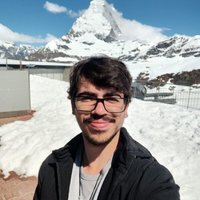
Participating in the exchange was an unbelievable experience. And being in the DPLP has made it even more surreal. From visiting UN’ Palace of Nations in Geneva to seeing snow from the top of the Matterhorn Mountain I have seen sights I never believed I would get to see up close. Moreover, this journey provided me with ample networking opportunities with international professors and researchers, their different ideas and insights even outside academia. Lastly, being so far away from home helped me to mature and develop, preparing me for whatever next journey I will embrace next!
“Benjamin, a HSG student at Insper”
Insper challenged me to think in new ways. The university’s participative and discussion-driven approach made complex topics like sustainability and globalization come alive—especially in the context of Brazil as a BRICS country. Professors were engaged, classes were thought-provoking, and the academic environment was vibrant and collaborative. Studying in São Paulo added a real-world layer to it all, and I left with a deeper understanding of how emerging countries like Brazil are shaping global conversations.
“Camila, an Insper student at HSG”
Joining the Digital Policy Leadership Program at St. Gallen was one of the best decisions I’ve made. As a Mechatronics Engineering student passionate about bioethics, exploring digital policy gave me new direction—especially through my research at the Digital Health Interventions Institute. Living with students from around the world, visiting the UN in Geneva, and even bungee jumping in Ticino made the experience unforgettable. I returned more independent, curious, and inspired to keep working at the intersection of technology and people’s lives.
“Constantin, a HSG student at Insper”
Spending a semester in Brazil was life-changing. Thanks to the Lemann Foundation, I joined the Digital Policy Program at Insper—an experience that exceeded every expectation. The courses, mentorship, and exchanges shaped not just my academic thinking, but my worldview. São Paulo became a second home. I was deeply moved by the warmth and openness of the people, and I return with lasting friendships, new perspectives, and a deep connection to Brazil.
Muito obrigado, Brasil. Até logo.
Enable This Content

Content required confirmation

Accept
Show More

Blog Posts

Geneva Days

✨ From November 14th to 15th, Professor Mariana Valente accompanied the 2024.01 and 2025.1 cohorts of the Digital Policy Leadership Program (DPLP) on a visit to international organizations in Geneva.

The DPLP is a semester-long exchange program between students from the University of St.Gallen, Switzerland, and Insper, Brazil. Funded by the Lemann Foundation, its mission is to train the next generation of leaders in digital policy for both countries.

During the visit, students got a firsthand look at the international ecosystem driving.


Day 1

  • A visit to the World Intellectual Property Organization (WIPO) kicked things off with a presentation into its efforts to protect innovators’ and creators’ ideas across borders.
  • Over lunch with Marcelo Daher, Human Rights Officer for Freedom of Expression at the OHCHR, students explored the UN system and the impact of information integrity on human rights.
  • At the DiploFoundation, Marilia Maciel, Head of Digital Commerce and Internet Policy, shared an overview of Geneva’s vibrant digital policy scene and ongoing global negotiations.
  • The day wrapped up at the Brazilian Mission to the WTO, where Minister-Counselor Erika Watanabe Patriota and Brazilian diplomats shared their perspectives on Brazil´s position in discussions about digital governance.

Day 2

  • At UNCTAD, students had the chance to meet Alexander Riveros, Chief of the Director’s Office for the Division on Technology and Logistics, and economist Laura Cyron. Students learned how UNCTAD helps developing countries harness technology for inclusive and sustainable growth and got to chat directly with the experts behind the 2024 Digital Economy Report.
  • The visit ended with a guided tour of the iconic Palais des Nations, led by Mazin Khan from UNITAR, giving students a glimpse into Geneva's rich diplomatic history. 

Our visit began at WIPO, where Ms. Deblue introduced WIPO’s mission of promoting innovation through intellectual property. She explained its international role and initiatives supporting businesses, policymakers, and countries.

Afterwards, we had an informal lunch discussion with Pedro Lana and Raquel Gatto, who are affiliated with ISOC and CGI.br (the Brazilian Internet Steering Committee). They explained the multistakeholder governance model and Internet Society’s mission to promote an open, globally connected, secure, and trustworthy internet and shared insights into digital inclusion, policy advocacy, and emerging debates around internet governance.

Following lunch, we visited DiploFoundation, where Ms. Horejsova presented Diplo’s work in strengthening the participation of developing countries in global digital governance. She highlighted courses and programs available to equip future leaders for the challenges of digital diplomacy and policy.

At the Palais des Nations, we met with Ms. Azin Tadjdini from OHCHR. Ms. Tadjdini gave us a clear overview of how the UN system operates, discussed priorities for the digital environment, and introduced the Global Digital Compact initiative.

The evening concluded with a dinner discussion with Isabel Ebert from the B-Tech Project. We discussed the interaction between the UN and companies and how the B-Tech Project helps major technology firms like Meta, Microsoft, and Cisco improve their terms of use to ensure platforms continue to respect human rights.

On the second day, we visited UNCTAD, where Ms. Cyron gave a presentation on the environmental and developmental impacts of digitization. We discussed how digital transformation is reshaping global trade and the importance of fostering more inclusive and sustainable digital economies.

We concluded our visit at UNITAR, where we toured the Palais des Nations and learned about UNITAR’s role in strengthening training and education for international cooperation and diplomacy.

We are deeply grateful to all the organizations and professionals who generously welcomed us, shared their time and expertise, and contributed to making this visit an exceptional learning experience. Their openness and insights made a lasting impact on all of us, and we look forward to building on these connections in our future work.

* The DPLP is an exchange program that brings together students from Insper in Brazil and the University of St. Gallen in Switzerland, funded by the Lemann Foundation and supported by the Law and Economics Foundation. Designed to develop the next generation of digital policy and Internet governance leaders, the program is open to bachelor’s students from both institutions and encourages participation from diverse academic backgrounds.

Geneva Days 2026

On the 11 and 12 of May, we guided our 2026 Digital Policy Leadership Fellows through the Geneva Days. This visit is one of the highlights of the program, as it allows students to visit institutions, talk to people, and get a much wider view of what the digital policy field is – as well as provide them with a glimpse of the different complexities of working internationally in these topics and of potential career paths.

On our first day, we visited the UN-OHCHR, the Centre on Knowledge Governance, and the Diplo Foundation.

At the UN-OHCHR, Marcelo Daher, a Human Rights Officer, explained the activities developed by the OHCHR, like hosting Special Rapporteurs, supporting commissions of inquiry, and working to embed human rights standards across digital governance agendas – from AI regulation to platform accountability. He also highlighted how the current moment is particularly challenging: budget cuts, state-driven agendas, and the political weaponization of free expression compressing the space in which the office can operate. 

Afterwards, the students had the opportunity to engage in a group discussion with Sean Flynn, Director of the Centre on Knowledge Governance. Drawing on empirical studies, he presented the agenda of IP and development, showing especially how discussions on copyright and AI can accommodate nuance and differentiate between commercial uses and uses for research and the public interest, considering the access to knowledge agenda.

Our third visit of the day was to the Diplo Foundation. Sorina Teleanu, Director of Knowledge, showcased their work in training diplomats to work in digital governance issues, and most interestingly guided us through the highly complex layers and overlaps in digital governance issues in international Geneva. Students were able to see that digital policy can be about infrastructure, AI, development, digital economy, human rights, security and safety, and capacity development, and that for each of these issues there are multiple ongoing processes.

On our second day, the students had a meeting breakfast with Carl Gahnberg from the Internet Society (ISOC), visited the Palais des Nations guided by UNITAR, and concluded the trip with a meeting at UNCTAD.

Carl Gahnberg, Senior Director of Public Policy and Technology at ISOC, shared a fascinating historical perspective on the origins of the Internet infrastructure and the challenges faced during its early development. He provided a deep dive in issues such as technical standards and domain name governance, a subject that rarely makes headlines, but without which the internet doesn’t work. We discussed how internet governance can mean different things, but in the specialized digital policy field it is more linked to discussions linked to the so-called “infrastructure layer”.

We had then a visit to the Palais des Nations led by Ainun Jariyah, from UNITAR’s Division for Multilateral Diplomacy. With lots of passion, she shared important historical and institutional aspects of the United Nations and its buildings, and linked the space with the kinds of discussions and decisions that take place daily. Students were especially excited by the opportunity to speak with delegates after a multilateral session on accessibility rights.

The trip concluded with attention to digital economy issues at UNCTAD, where  Laura Cyron, Economic Affairs Officer at the Digital Economy Policy Research Section, shared data and reflections on tech concentration but also concentration on AI research and the multilayered challenges in global digital inclusiveness. She then talked details about a 2024 report on the environmental footprint of digital technology. Spoiler: the burden is higher on developing nations, considering who capture most benefits and who bears the environmental costs the most.

We are deeply grateful to all the institutions, professionals, and hosts who generously welcomed our delegation and shared their time, knowledge, and experiences with us. According to our students, it has been eye-opening and truly life changing.

Looking forward to the next editions of this inspiring initiative.

north