Published: 18.08.2026
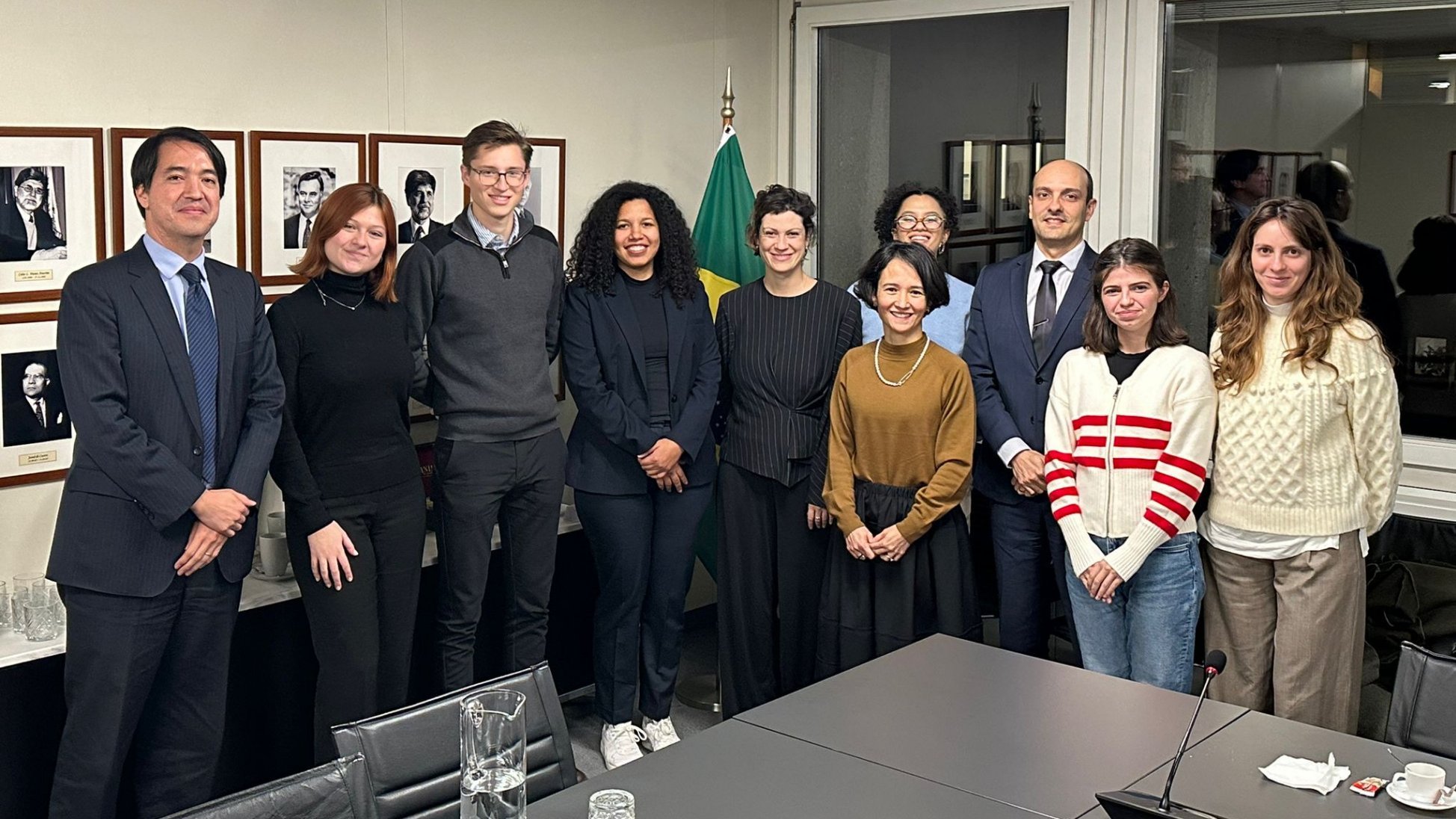
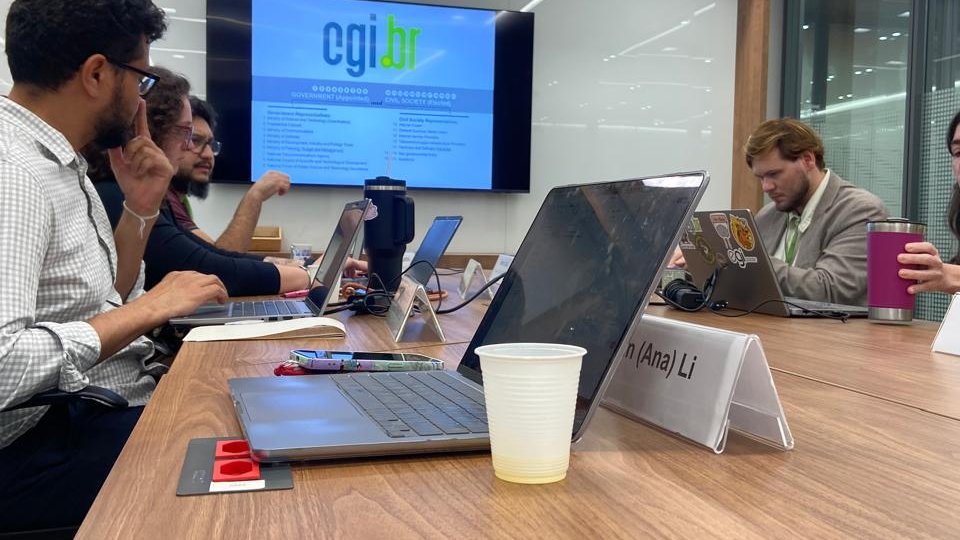
On August 11, our 2026 and 2027 Digital Policy Leadership Program (DPLP) Fellows visited the Brazilian Internet Steering Committee (CGI.br). The visit is one of the highlights of the program in Brazil, as it offers participants an opportunity to gain a deeper understanding of the country’s multistakeholder model of Internet governance.
During the visit, the group attended a presentation on Internet governance and the role of CGI.br in Brazil. The session introduced the Committee’s multistakeholder structure, its election process, the main stakeholder groups represented, and its core activities. The Fellows also learned about CGI.br’s work on online gender-based violence, with particular attention to the debate surrounding non-consensual intimate deepfakes.
The program also included an open discussion, allowing participants to ask questions, exchange perspectives, and explore issues related to digital regulation and public policy in greater depth.
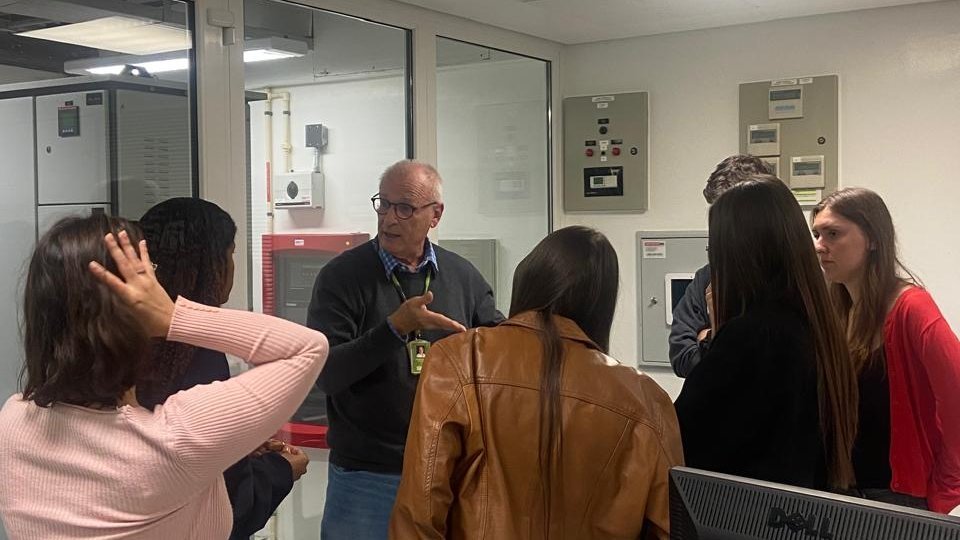
At the end of the visit, the group toured the data center, adding a practical dimension to the experience by learning more about the infrastructure that supports part of Brazil’s digital ecosystem.
The visit is part of the DPLP’s broader effort to bring Fellows closer to institutions that play an important role in shaping and debating digital policy in Brazil.
We are very grateful to all the professionals who generously shared their knowledge and experience with us during the visit. A special thank you to the CGI.br team for such a warm and insightful welcome.
Published: 15.05.2026
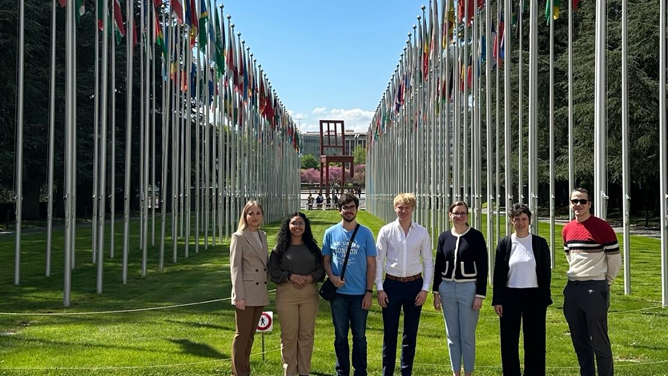
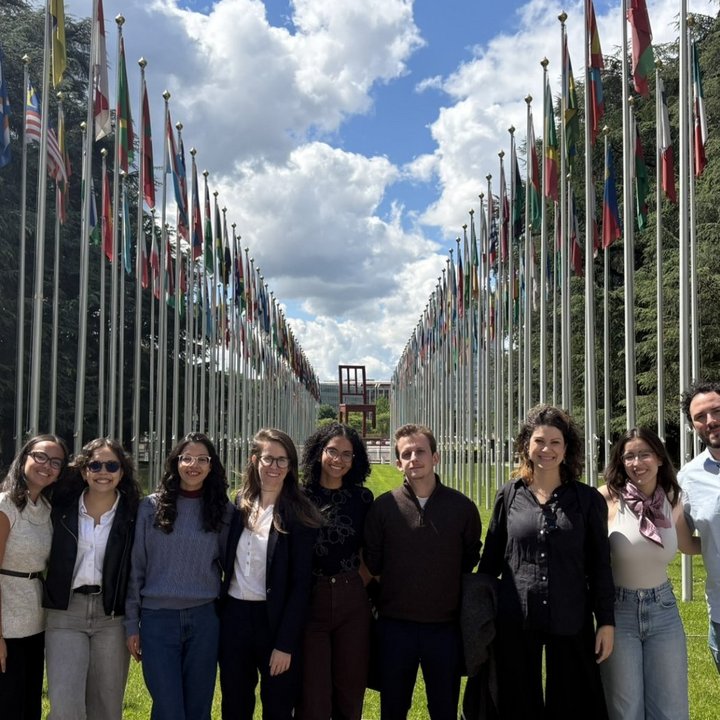
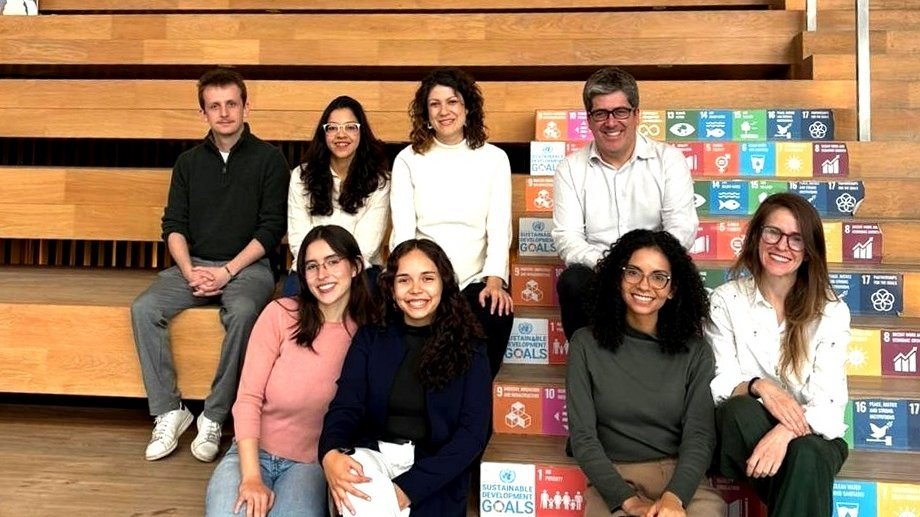
On the 11 and 12 of May, we guided our 2026 Digital Policy Leadership Fellows through the Geneva Days. This visit is one of the highlights of the program, as it allows students to visit institutions, talk to people, and get a much wider view of what the digital policy field is – as well as provide them with a glimpse of the different complexities of working internationally in these topics and of potential career paths.
On our first day, we visited the UN-OHCHR, the Centre on Knowledge Governance, and the Diplo Foundation.
At the UN-OHCHR, Marcelo Daher, a Human Rights Officer, explained the activities developed by the OHCHR, like hosting Special Rapporteurs, supporting commissions of inquiry, and working to embed human rights standards across digital governance agendas – from AI regulation to platform accountability. He also highlighted how the current moment is particularly challenging: budget cuts, state-driven agendas, and the political weaponization of free expression compressing the space in which the office can operate.
Afterwards, the students had the opportunity to engage in a group discussion with Sean Flynn, Director of the Centre on Knowledge Governance. Drawing on empirical studies, he presented the agenda of IP and development, showing especially how discussions on copyright and AI can accommodate nuance and differentiate between commercial uses and uses for research and the public interest, considering the access to knowledge agenda.
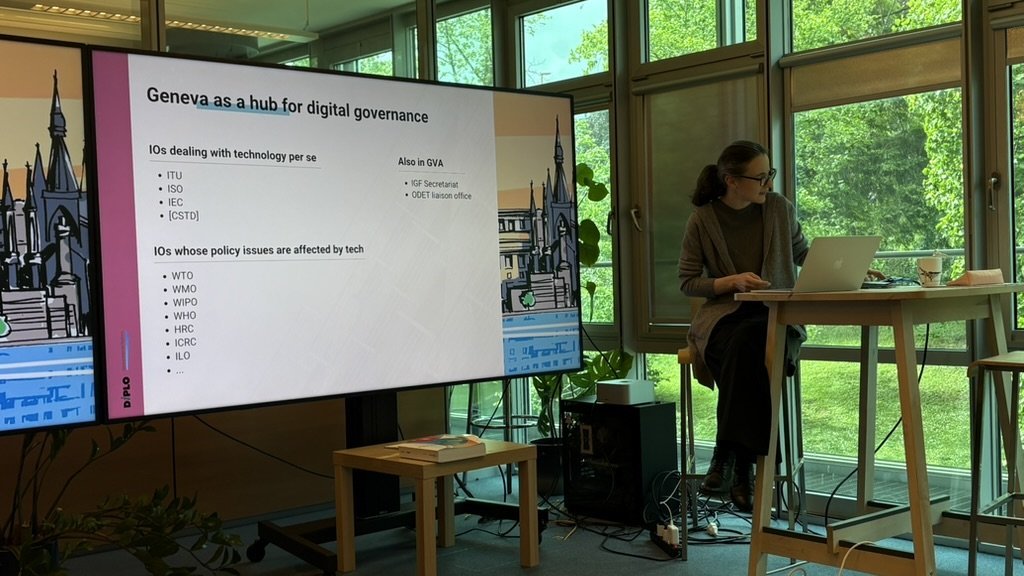
Our third visit of the day was to the Diplo Foundation. Sorina Teleanu, Director of Knowledge, showcased their work in training diplomats to work in digital governance issues, and most interestingly guided us through the highly complex layers and overlaps in digital governance issues in international Geneva. Students were able to see that digital policy can be about infrastructure, AI, development, digital economy, human rights, security and safety, and capacity development, and that for each of these issues there are multiple ongoing processes.
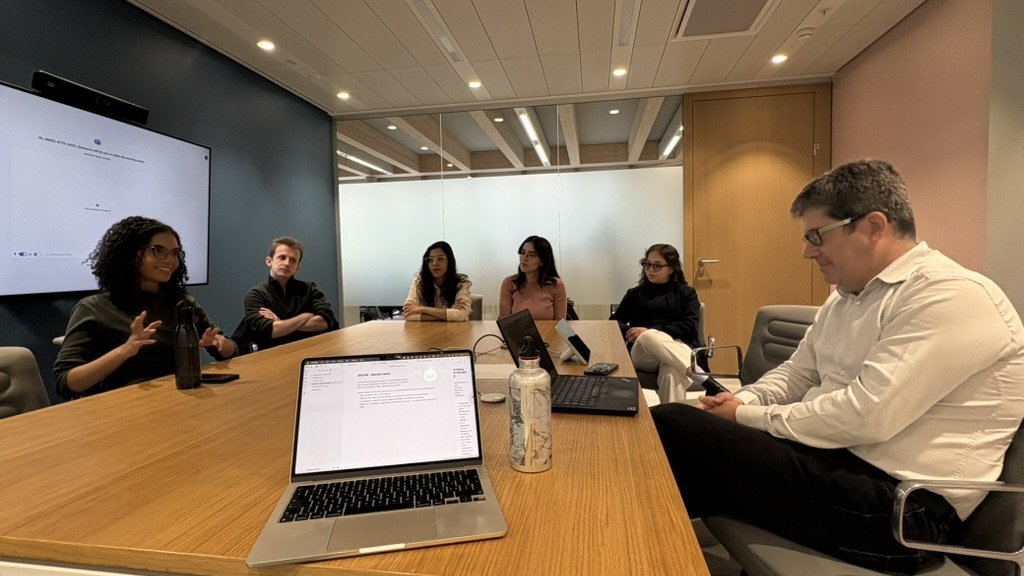
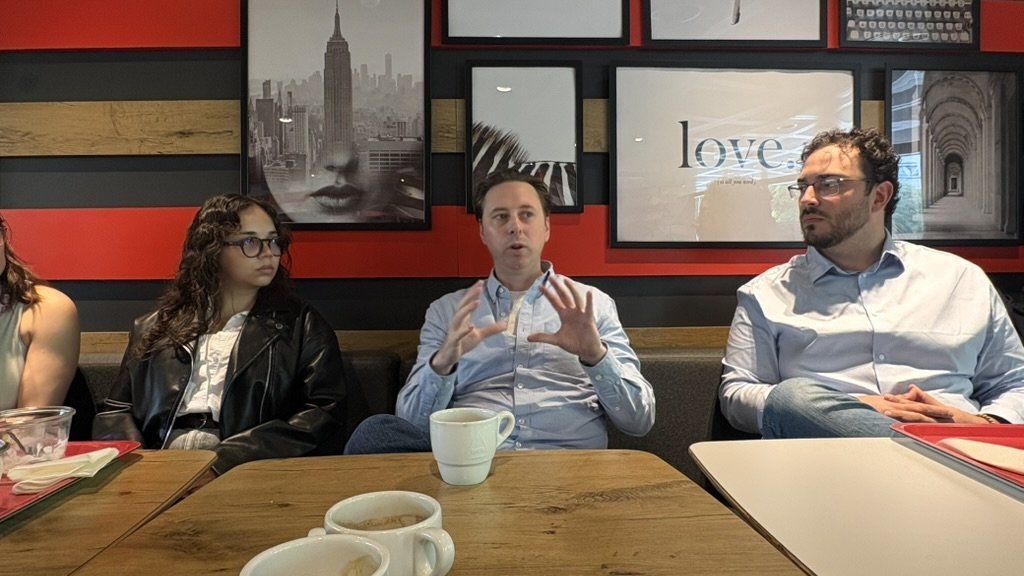
On our second day, the students had a meeting breakfast with Carl Gahnberg from the Internet Society (ISOC), visited the Palais des Nations guided by UNITAR, and concluded the trip with a meeting at UNCTAD.
Carl Gahnberg, Senior Director of Public Policy and Technology at ISOC, shared a fascinating historical perspective on the origins of the Internet infrastructure and the challenges faced during its early development. He provided a deep dive in issues such as technical standards and domain name governance, a subject that rarely makes headlines, but without which the internet doesn’t work. We discussed how internet governance can mean different things, but in the specialized digital policy field it is more linked to discussions linked to the so-called “infrastructure layer”.
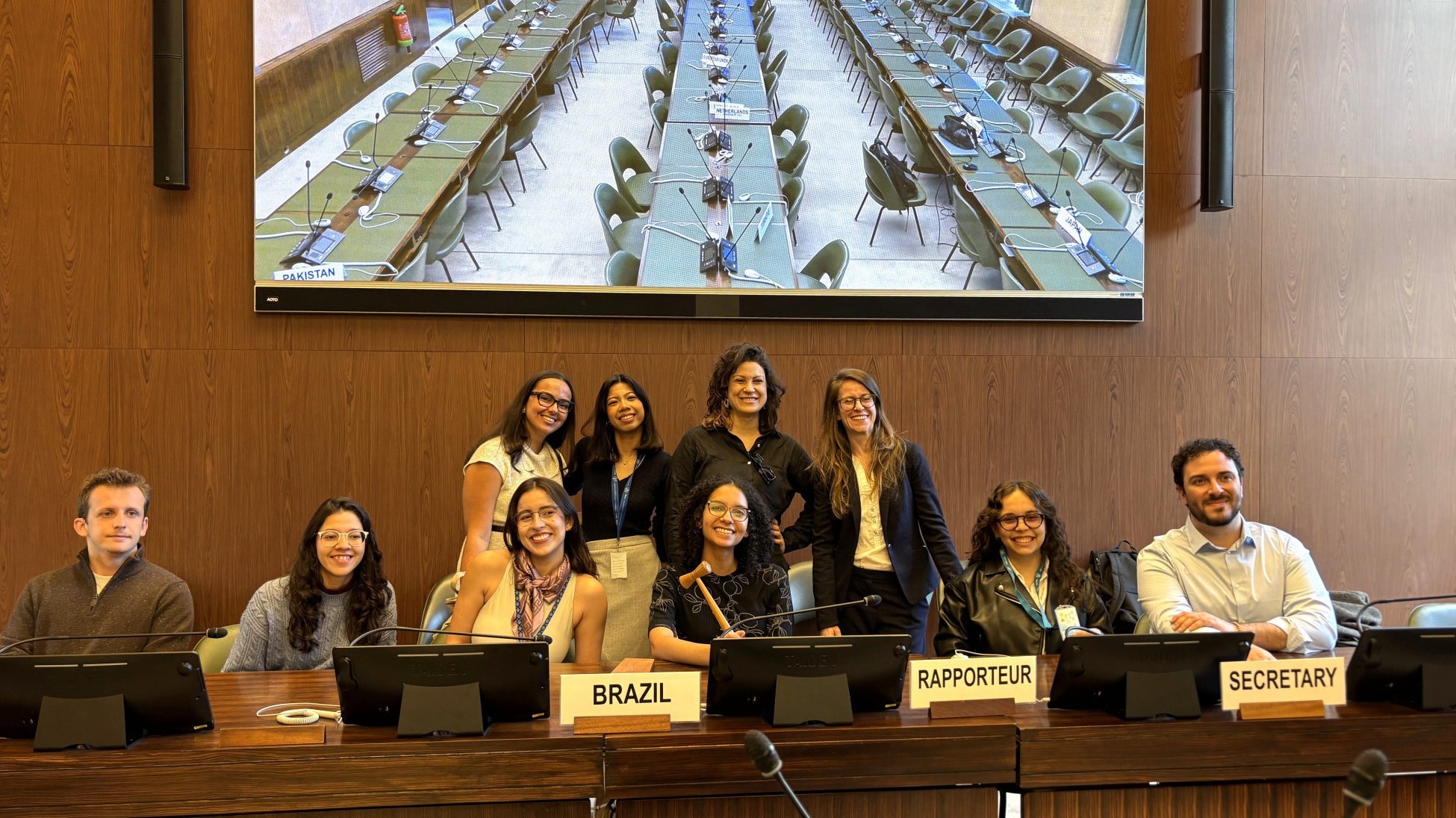
We had then a visit to the Palais des Nations led by Ainun Jariyah, from UNITAR’s Division for Multilateral Diplomacy. With lots of passion, she shared important historical and institutional aspects of the United Nations and its buildings, and linked the space with the kinds of discussions and decisions that take place daily. Students were especially excited by the opportunity to speak with delegates after a multilateral session on accessibility rights.
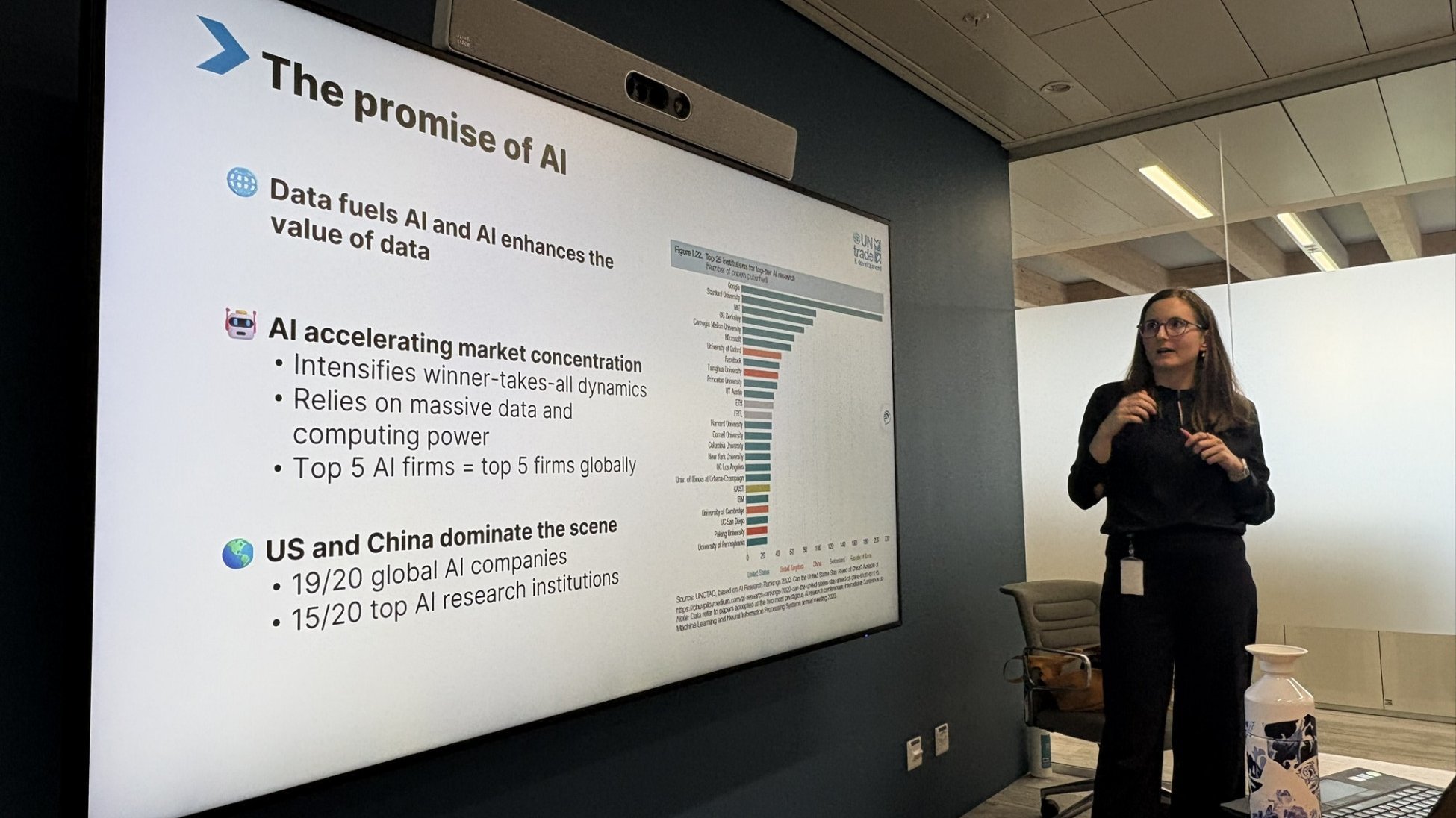
The trip concluded with attention to digital economy issues at UNCTAD, where Laura Cyron, Economic Affairs Officer at the Digital Economy Policy Research Section, shared data and reflections on tech concentration but also concentration on AI research and the multilayered challenges in global digital inclusiveness. She then talked details about a 2024 report on the environmental footprint of digital technology. Spoiler: the burden is higher on developing nations, considering who capture most benefits and who bears the environmental costs the most.
We are deeply grateful to all the institutions, professionals, and hosts who generously welcomed our delegation and shared their time, knowledge, and experiences with us. According to our students, it has been eye-opening and truly life changing.
Looking forward to the next editions of this inspiring initiative.
Published 20.11.2025
1st Geneva Day Report
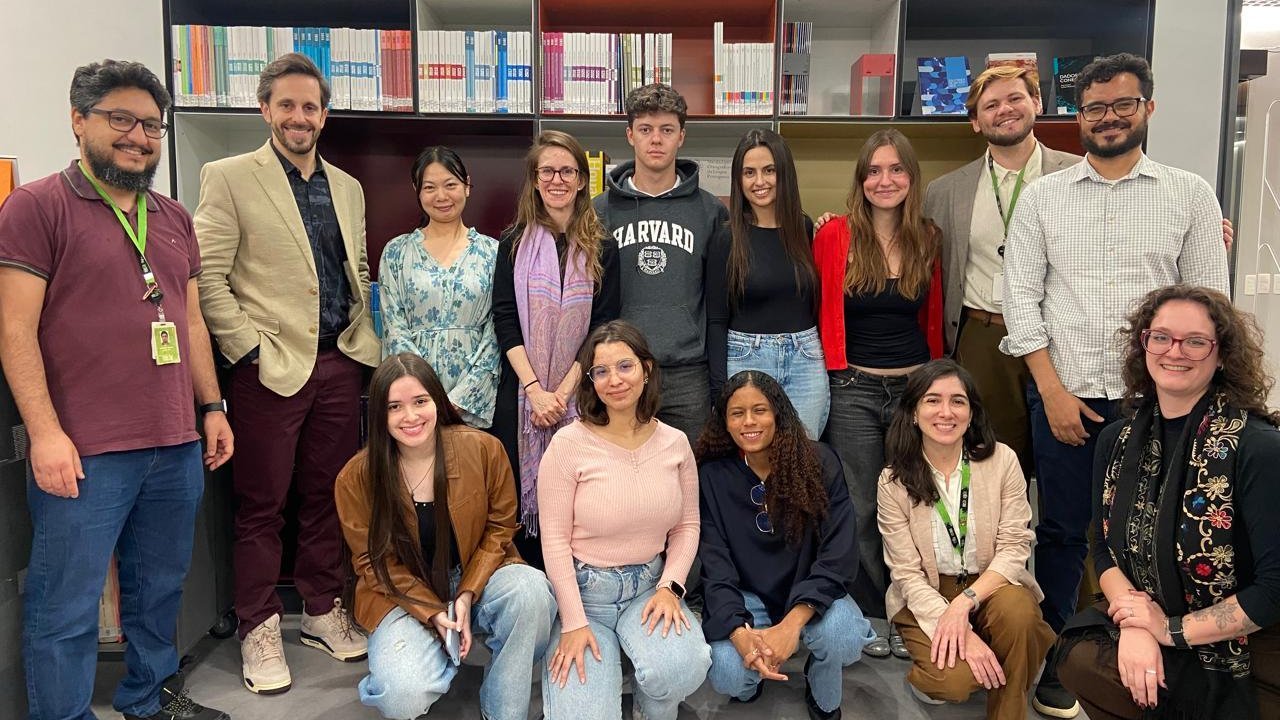
From November 14th to 15th, Professor Mariana Valente accompanied the 2024.01 and 2025.1 cohorts of the Digital Policy Leadership Program (DPLP) on a visit to international organizations in Geneva.
The DPLP is a semester-long exchange program between students from the University of St.Gallen, Switzerland, and Insper, Brazil. Funded by the Lemann Foundation, its mission is to train the next generation of leaders in digital policy for both countries.
During the visit, students got a firsthand look at the international ecosystem driving.
Day 1
Day 2
2nd Geneva Day Report
Our visit began at WIPO, where Ms. Deblue introduced WIPO’s mission of promoting innovation through intellectual property. She explained its international role and initiatives supporting businesses, policymakers, and countries.
Afterwards, we had an informal lunch discussion with Pedro Lana and Raquel Gatto, who are affiliated with ISOC and CGI.br (the Brazilian Internet Steering Committee). They explained the multistakeholder governance model and Internet Society’s mission to promote an open, globally connected, secure, and trustworthy internet and shared insights into digital inclusion, policy advocacy, and emerging debates around internet governance.
Following lunch, we visited DiploFoundation, where Ms. Horejsova presented Diplo’s work in strengthening the participation of developing countries in global digital governance. She highlighted courses and programs available to equip future leaders for the challenges of digital diplomacy and policy.
At the Palais des Nations, we met with Ms. Azin Tadjdini from OHCHR. Ms. Tadjdini gave us a clear overview of how the UN system operates, discussed priorities for the digital environment, and introduced the Global Digital Compact initiative.
The evening concluded with a dinner discussion with Isabel Ebert from the B-Tech Project. We discussed the interaction between the UN and companies and how the B-Tech Project helps major technology firms like Meta, Microsoft, and Cisco improve their terms of use to ensure platforms continue to respect human rights.
On the second day, we visited UNCTAD, where Ms. Cyron gave a presentation on the environmental and developmental impacts of digitization. We discussed how digital transformation is reshaping global trade and the importance of fostering more inclusive and sustainable digital economies.
We concluded our visit at UNITAR, where we toured the Palais des Nations and learned about UNITAR’s role in strengthening training and education for international cooperation and diplomacy.
We are deeply grateful to all the organizations and professionals who generously welcomed us, shared their time and expertise, and contributed to making this visit an exceptional learning experience. Their openness and insights made a lasting impact on all of us, and we look forward to building on these connections in our future work.
*The DPLP is an exchange program that brings together students from Insper in Brazil and the University of St.Gallen in Switzerland, funded by the Lemann Foundation and supported by the Law and Economics Foundation. Designed to develop the next generation of digital policy and Internet governance leaders, the program is open to bachelor’s students from both institutions and encourages participation from diverse academic backgrounds.